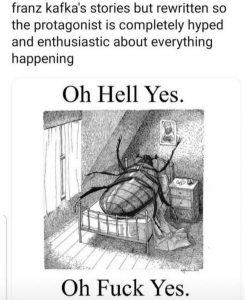
“Memes should be understood easily because by being a subversion of the observable truth they are easily perceived by the idea of truth that is being subverted.”
Ili drugim riječima – koje sranje burazeru.
— I decided to write this post in a completely unedited manner. Thoughts are written along as they’re generated. Apologies in advance for poor text clarity. —
Prelude: The Severina Trifecta
This text was heavily influenced by one of my early memes on account of Severina’s hit song “Mala Je Dala”. There is a scene that is an unintentionally subtle, yet obvious insight into Balkan’s omnipresent traditional chauvinistic behavior. Severina is to be impressed by the ideological transformation of a patriarchally oppressive lower-class worker to a situated, suited man with a bowtie – but he is no better. He masks his shortcomings with symbolic commodities, no longer with actual commodities (the obvious gold chain around his neck). Welcome to Balkan. To piggyback off Žižek “Europe – here women get beaten and raped and don’t like it. Balkan – Here women get beaten and raped and like it.”
As disgusting as it sounds, it is actually a great ideological (perceptional) distinction between the West’s liberated woman and the East’s idea of a subservient, modest female figurine. What is very common in the Balkans when we speak of sexual harassment, sexism, and so on, all criticism is drawn from a familial bond point of view (“Imagine if it were your Daughter or Sister or Mother!“). As if empathy here evolved in a completely illogical way. And it did, hand-in-hand with the toxic masculine patriarchy. (Just as food for thought, imagine what we think of a man when he cries. He must be really hurt. The situation is critical. His emotions are undoubtfully valid! Now think of a woman.)
Severina’s Gas Gas
Volim, volim, volim, volim
Volim, volim, volim, volim
Volim, volim kad na musko mirise
I love, I love, I love, I love
I love, I love, I love, I love
I love, I love it when it smells of Man
In Foucault’s observations – the individual (Severina) with her identity and characteristics is the indisputable product of power exercised over bodies, multiplicities, movements, desires, forces — and is in fact a product of power relations. Why would an attractive, desirable woman enjoy sexual intercourse with a smelly, musky trucker? The state apparatus doesn’t determine some latent condition of our ability and needs – it produces them; turning our gaze away from the ludicrously obvious attempts at a shift to full industrial totalitarianism.
And so we were robbed of Social Realism. We were robbed of transparent works of art which criticize the power structure. All attempts in the past few decades are perceived as a comedy – satire. Or even worse, yearning for a different lifestyle, while you don’t even believe in it. The ruling class becomes nothing but a ghastly idea from the past. We are infantilized to the point at which we cannot even criticize our own class without being smothered by the “cancel culture”. There is no escape. You are a working-class individual. And you will write songs about how much you like being one. And you will enjoy it.
Djevojka sa Sela
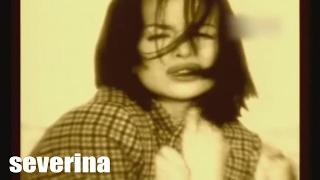
Vidjela sam svjetla grada, dobro i zlo
Svi su kao prijatelji, al' hvala im za to
Ja sam neka druga vrsta, ja bi iskreno
U meni je srce ostalo

Ja sam djevojka sa sela
Noga mi je bosa
Rumeno mi lice, umila ga rosa
Ne, ne, ne trebam ja zlato
Niti dukat žuti
Samo trebam rijeku da izvor pomuti
Ljubim tvoje oko plavo
Sve bi tebi dala sunce moje malo
Ti si sve to što mi treba
Ja sam tvoja mala
Djevojka sa sela
I saw the sligh of the city, good and bad
All are like friends, but thanks to them for that
I am a different type, I would like sincerity
My heart stayed inside me

I am a girl from the village
My legs are barefoot
My face is rosey
The morning dew washed it
No, I don't need gold
Nor a golden dozen
I only need a river to obscure the spring
I love your blue eyes
I would give you everything, my little
You are everything that I need
I am your little
girl from the village
On Social Realism
Social realism is the term used for work produced by painters, printmakers, photographers, writers and filmmakers that aims to draw attention to the real socio-political conditions of the working class as a means to critique the power structures behind these conditions. While the movement’s characteristics vary from nation to nation, it almost always utilizes a form of descriptive or critical realism. Taking its roots from European Realism, Social Realism aims to reveal tensions between an oppressive, hegemonic force and its victims.
Wikipedia, Social Realism
The term is sometimes more narrowly used for an art movement that flourished between the two World Wars as a reaction to the hardships and problems suffered by common people after the Great Crash. In order to make their art more accessible to a wider audience, artists turned to realist portrayals of anonymous workers as well as celebrities as heroic symbols of strength in the face of adversity. The goal of the artists in doing so was political as they wished to expose the deteriorating conditions of the poor and working classes and hold the existing governmental and social systems accountable.
I Can Has Cheezburger? Sorry, machine broke.
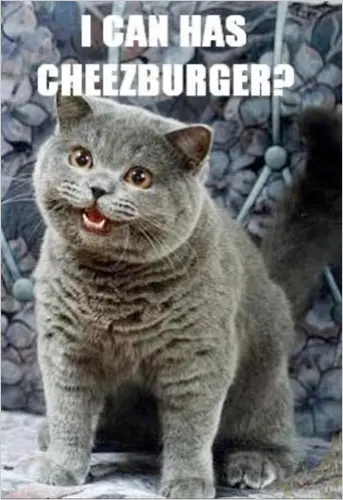
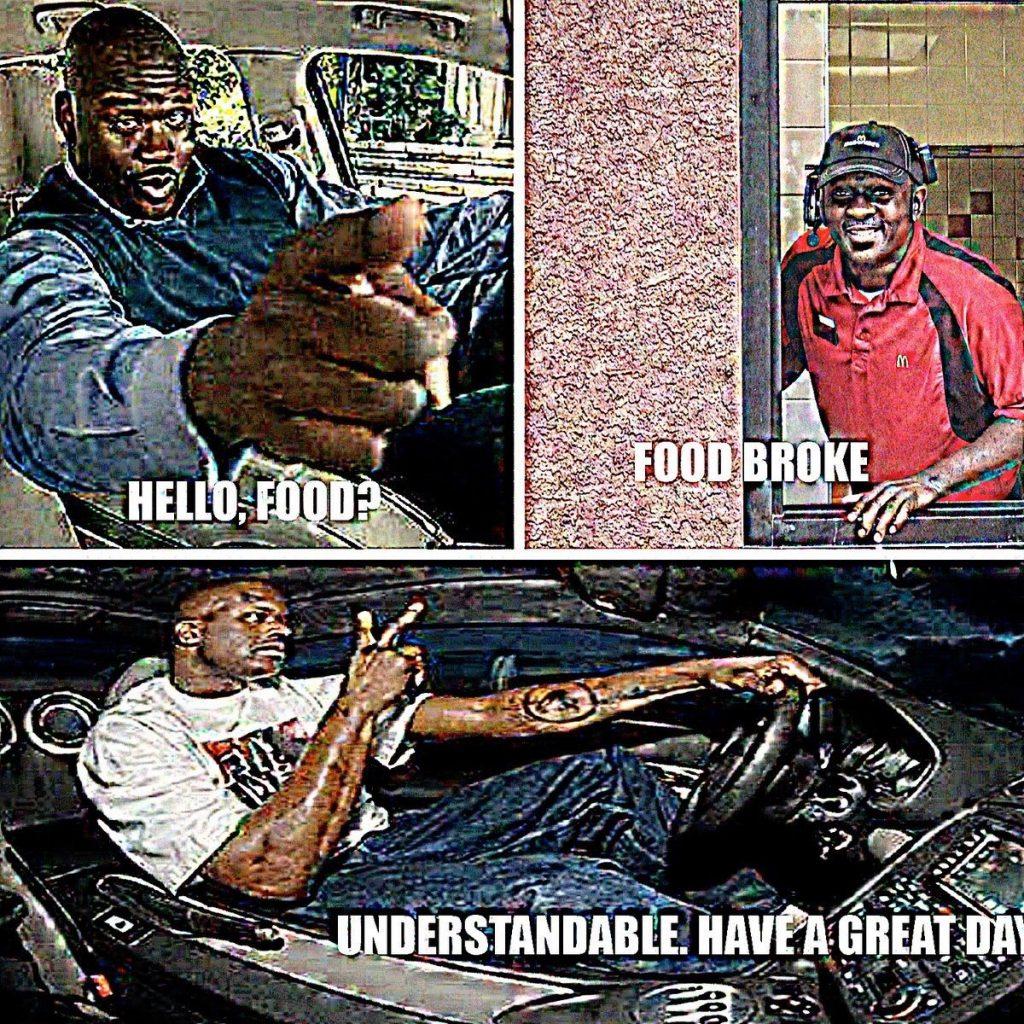
Memes evolved beautifully. Few things bring me greater joy than the thought that one day, historians will look at memes to interpret our lives. It will take a lot of effort though. Often when new friends and I talk about art, someone may ask: “What’s the point of .. let’s say art history? Why would you need to study old art to understand art made today?” And the quickest reply to get the idea across is “Imagine someone unironically sends you an “I Can Haz Cheezburger?” cat meme. You’d think they’re developmentally retarded”.
Art was always quite elitist. Then with urbanism came Graffiti – “The People’s Art” and it was quickly labeled as vandalism. Then we were blessed with this magical thing called the internet. The unchecked flow of thought gave birth to an amazing movement. The meme movement. A movement that is so inclusive it can bond people over references about things they never even enjoyed or liked. If you attended secondary education you were taught about Kafka. And you probably hated the bug fucker. Who would have ever imagined that one day, you’d be able to use it to make a nice girl or boy laugh? Who would have ever imagined that you could send an untitled stock photo and say more about your current feelings than 1000 words could? Who would have ever imagined that we could so easily bond over such seemingly abstract concepts?